LeSS Adoption at Poster POS
TL;DR:A deep LeSS adoption at a Ukrainian SaaS company — started during COVID lockdowns, continued through full-scale war. Component teams became feature teams in a single flip event. Documents not just the design moves but the reasoning, failures, and what people felt at each step. Most adoptions die in the first two months; this one survived bombardment.
This is a short reading guide to a long, honest case study. The full version lives on less.works/case-studies/poster — a few hours of reading, but worth every minute if you care about how real product organizations are designed and re-designed under pressure.
Poster POS is a Ukrainian SaaS company building cloud POS for hospitality (HoReCa). The case study covers a deep LeSS adoption that began during COVID-19 lockdowns and continued through the full-scale Russian invasion in 2022. Co-authored with the Poster team, it documents not just the design moves, but the reasoning, the failures, and what the people inside felt at each step.
Below is what you'll find, chapter by chapter, and why each part is worth your time.
Preamble (by Candlelight)
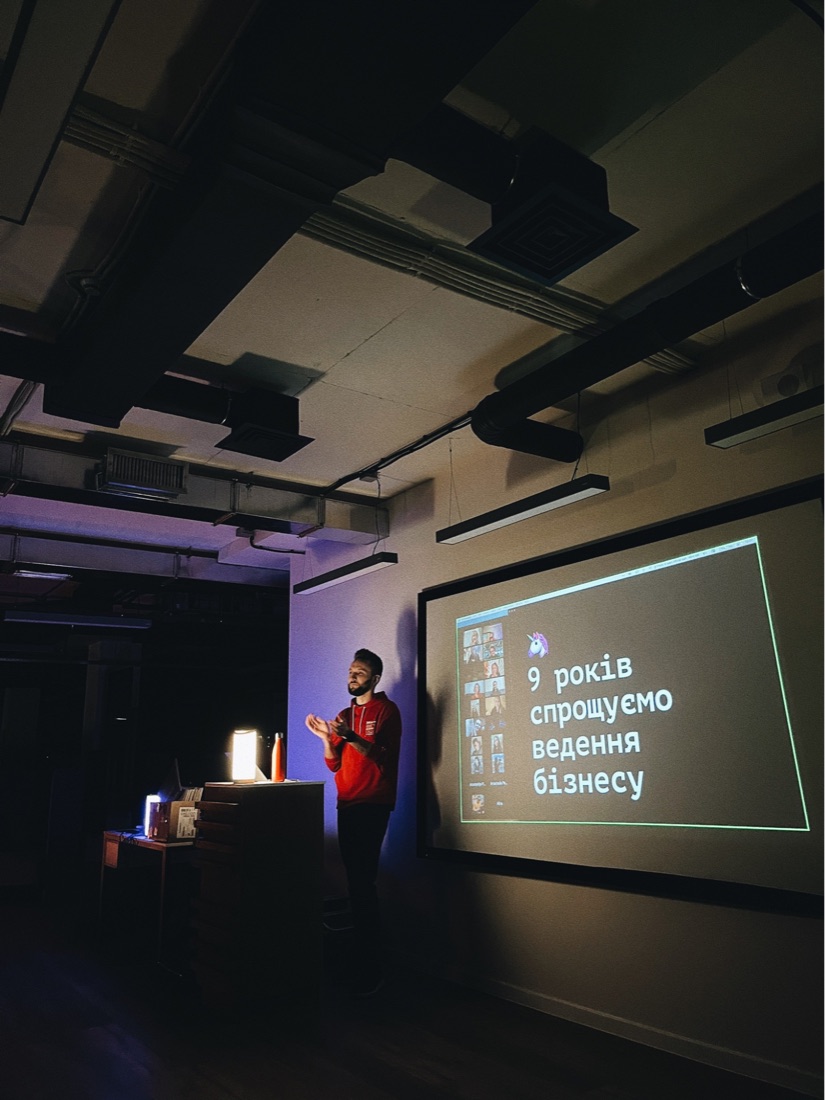
A short, raw opener: training Poster's engineers in air-raid shelters and during blackouts, presenting org-design slides by candlelight in Kyiv winter 2022.
Why it matters: the rest of the case study sits on top of this context. Most "transformation" stories are told from comfortable rooms — this one is told from a country at war, and that changes both what's possible and what's required.
About Poster and This Case Study
Topics: scope of the case, inspirations, company history, business model (B2B SaaS for cafes/restaurants/retail), product surface (POS apps, back office, ecosystem), team size at the time of adoption, COVID-19 and the sudden full-remote setup.
Why it matters: Poster is a real mid-sized product company, not a Fortune 500 thought-experiment. The constraints (people, money, dependencies, technical debt, time pressure) are the constraints most readers actually face.
Product Development Before LeSS
Topics: component teams; per-team Product Owners; OKRs cascaded down + the Contract Game; rising defect rates; internal product complexity; weak engineering practices; multi-week stabilization "periods"; UX degradation; flat-lining development capacity. Closes with raw quotes from employees.
Why it matters: this chapter is a mirror. If you recognize three or more symptoms here in your own org, the rest of the case study is your roadmap. The "before" picture is also documented as systems diagrams — useful as a diagnostic template you can copy.
Designing the New Organization
Topics: defining the optimizing goal; owning the change (vs. delegating it to a consultant); educating everyone — leaders, managers, engineers, PMs; the role of the Product Owner at Poster; the initial organizational blueprint; perfection vision.
Why it matters: the most copied — and most failed — part of LeSS adoptions is the org redesign. As I argue in Human Framework Dependency Syndrome, solutions must come from within. Poster shows what it actually looks like to do the design work: who's in the room, what artifacts they produce, and how the leaders avoid offloading the decision to outside experts.
LeSS Flip Event
Topics: format and agenda of the all-hands switchover event; the Feature Team Self-Design Workshop (engineers picking their own teams against constraints); initial Product Backlog Refinement across the new teams; Sprint Planning I and II run end-to-end; closing rituals.
Why it matters: a "Flip" is the moment a component-based org becomes a feature-team org in one big-bang event. Poster's playbook is concrete and reusable: the agendas, the workshop instructions, and the constraints used for team self-design are reproducible at other companies.
First Twenty LeSS Sprints — Observations and Lessons Learned
Topics: perceived speed (and why it feels slower at first); product backlog management; the difference between a wrong product backlog and a true one; product support process; the changing role of engineering managers; the engineering community as a pull mechanism for practice improvement; the evolution of the Definition of Done.
Why it matters: most adoptions die in the first two months — the agile transformation will not be televised. This chapter is the survival guide — what to look for, what to ignore, and what to fix urgently. It's also where the case study gets most counter-intuitive (e.g. why team velocity is a misleading signal in the first quarter).
The Path is the Goal
Topics: short reflective closing; the postscript "Russian warship, go f… yourself!" placing the adoption back into its wartime context.
Why it matters: LeSS adoption is presented not as a project with an end date but as a continuous direction of travel — closer to a kata than to a deliverable. For a detailed look at the Poster journey mapped on Org Topologies, see Case Study: Studying LeSS Adoption at Poster POS Inc.. This framing is critical for leaders who're shopping for a one-quarter transformation.
References
The case study closes with a small set of references — books, talks, and prior LeSS case studies that shaped Poster's adoption.
Read the full case study at less.works/case-studies/poster. Allow a few hours — it rewards slow reading.
Alexey Krivitsky
Co-author of 10X ORG and co-creator of Org Topologies. Helps organizations rethink, redesign & rewire themselves for the AI era — from the codebase to the boardroom.

As a full-stack consultant, I operate across all three layers — AI Fluency, Team Flow & Org Fit. Talk to me to get a custom offer that matches your organization’s maturity to drive the impact.